Proper waste management not only brings positive impacts to environmental sustainability but also holds the potential to create economic value. At the Hu’u Project, PT Sumbawa Timur Mining (STM) strives to manage organic waste sustainably, one of which is through maggot cultivation. This organic waste management initiative is part of STM’s commitment to realizing the Zero Waste concept promoted by the Provincial Government of West Nusa Tenggara (NTB).
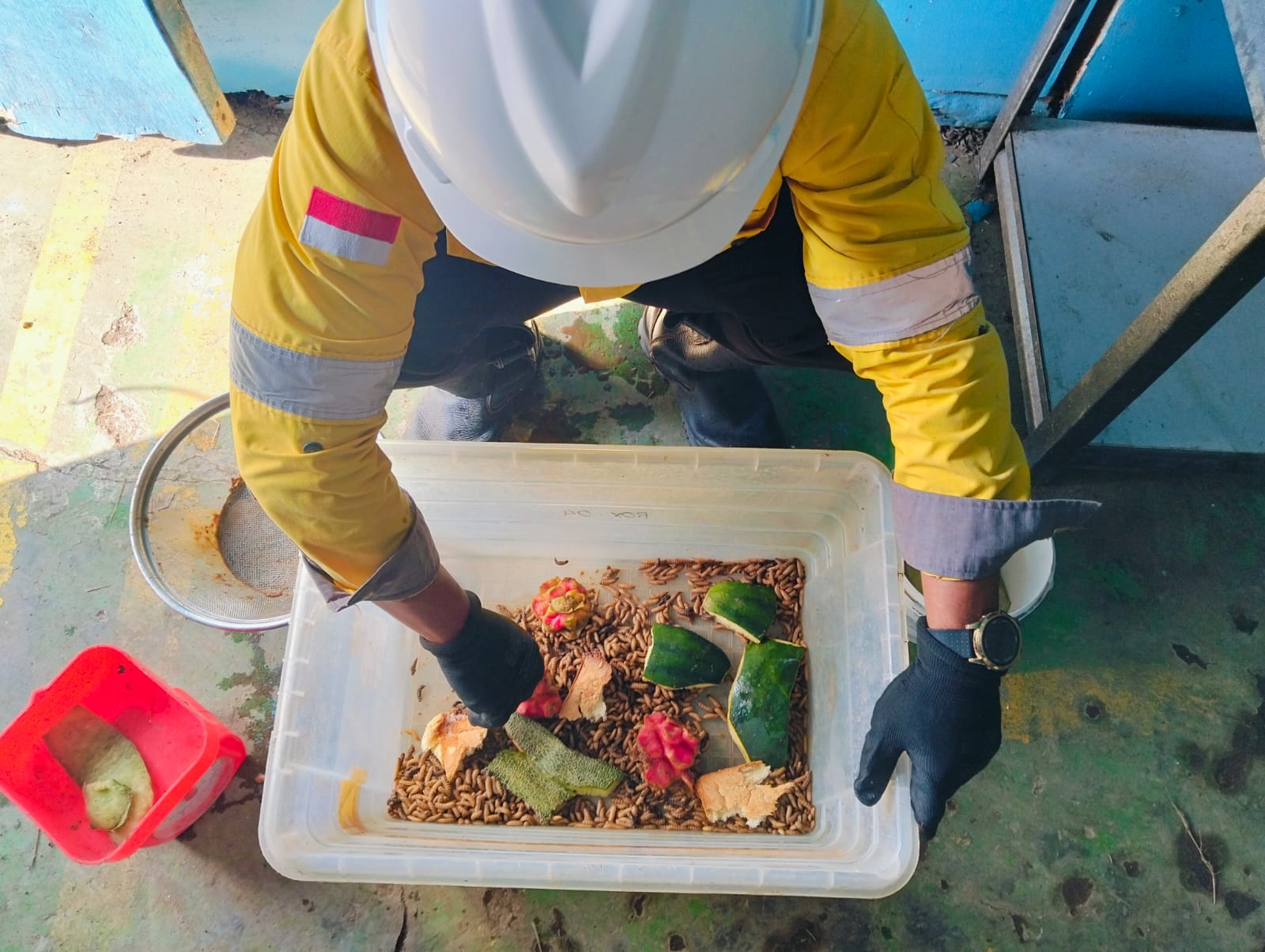
The maggot utilization program, initiated in 2024, is currently in a small-scale trial phase and is designed for further development in the future. This initiative serves as an alternative to existing composting methods, with the primary goal of reducing the burden of waste sent to final disposal sites (TPA). The organic waste used in this program is sourced from the company’s daily activities, such as food scraps.
The maggots used are of the black soldier fly species (Hermetia illucens), commonly utilized in organic waste management due to their non-pathogenic nature and high efficiency in decomposition. In addition to aiding in waste breakdown, maggots can also be processed into animal feed, fertilizer, and raw materials for other products, thereby offering economic value. This method supports a more sustainable ecosystem.
Typically, maggots can be harvested after 10 to 14 days, when they reach optimal size and high nutritional content. The harvesting process involves separating active larvae from the waste medium using manual screening methods or automatic separation tools. Meanwhile, the decomposition residue left in the medium—known as frass—can be used as organic fertilizer, adding further value to the waste processing cycle.
Organic waste management using maggots is one implementation of the reduce, reuse, and recycle (3R) concept at STM’s work sites. To support this program, the company also collaborates with waste banks for waste handling and runs a paperless office initiative. STM continues to conduct outreach to both internal stakeholders and surrounding communities to jointly realize a more sustainable environment.
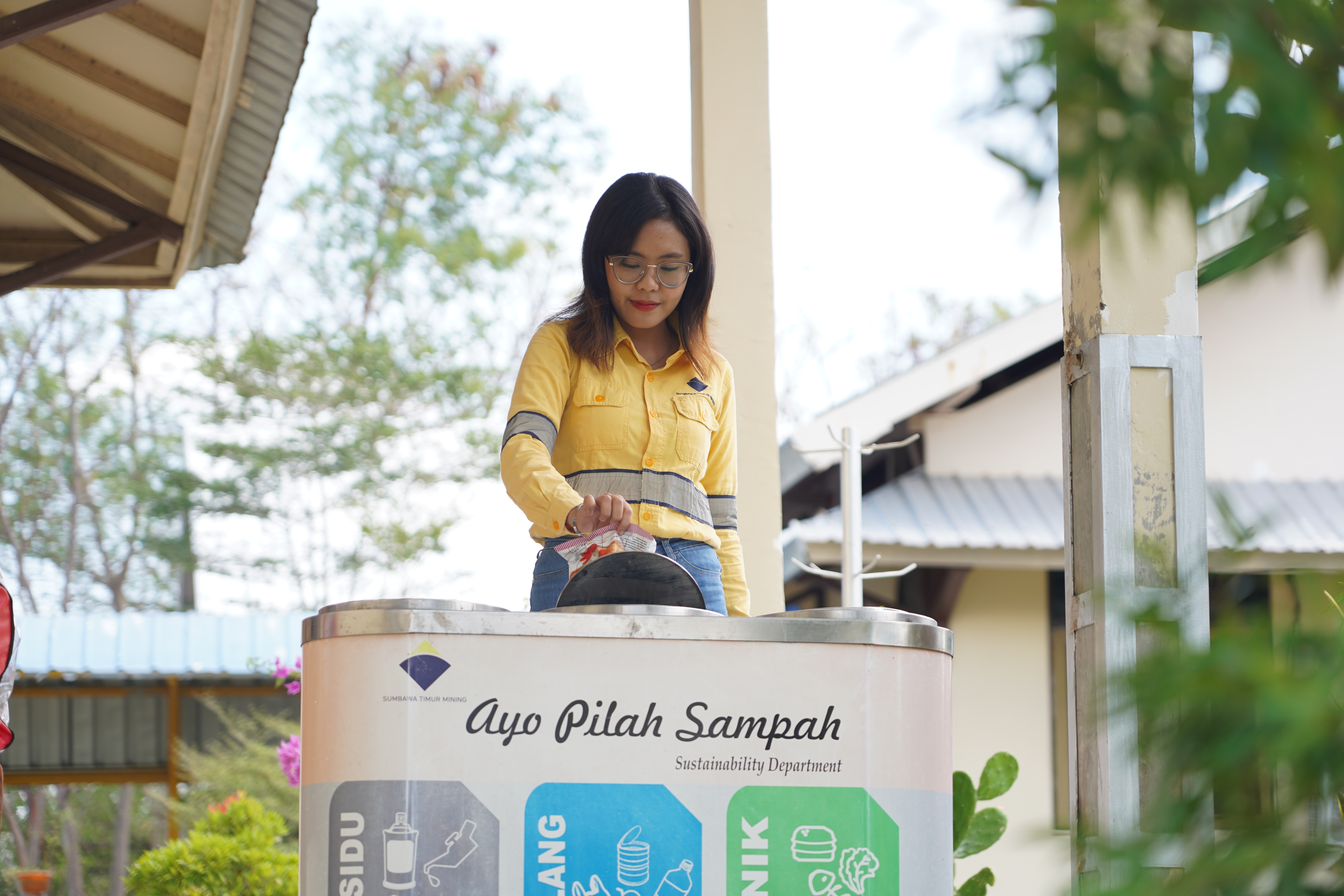
Strengthening Collaboration
Waste management carried out by STM emphasizes the principle of professional collaboration. In practice, STM works with third parties that hold official permits and possess strong professional capabilities in waste management. These partners also employ qualified professionals to ensure that waste handling is conducted safely, routinely, and in accordance with applicable regulations.
Furthermore, every work area managed by STM or its contractors is equipped with waste containment facilities according to each waste type. This ensures that all forms of waste management are carried out in compliance with standards. STM also ensures that every temporary storage facility (TPS) built and operated has the proper permits to hold all waste before being transported by its partners.
STM implements integrated waste management as part of the company’s commitment to upholding the sustainability of the surrounding ecosystem. Protection of water, air, flora, and fauna is carried out in accordance with the Environmental Management Efforts and Environmental Monitoring Efforts (UKL-UPL) prepared prior to commencing activities. Environmental responsibility is an integral part of STM’s mining exploration journey.
Currently, the hazardous and toxic waste (B3) generated in STM’s work areas is predominantly used oil. This waste results from STM’s exploration activities, such as drilling, operation of heavy equipment, helicopters, passenger vehicles, and other supporting tools like generators. There are also absorbents such as cleaning cloths used to wipe residual oil and other B3 substances. This waste is consistently managed in accordance with regulations to prevent contamination of the surrounding environment.
A series of monitoring and testing is also routinely conducted on river water, groundwater, wells, and air quality. These tests are carried out in collaboration with accredited laboratories to ensure that environmental conditions are assessed accurately and accountably. The results are reported periodically by STM’s Sustainability team to the government as a form of the company’s compliance with prevailing environmental management regulations.
---
Learn more about STM’s other initiatives in realizing the Zero Waste concept here.